If you have been Googling “hearing test near me,” you are already doing something important — taking your hearing health seriously. At Advanced Hearing & Balance Specialists, we provide comprehensive audiological evaluations for patients of all ages. Our goal is to give you clear, actionable answers, not a one-size-fits-all recommendation.
Where to Get a Hearing Test
There are several places you can go for a hearing evaluation, but they are not all equal:
Audiologist (Best Option)
An audiologist holds a doctoral-level degree and is trained to evaluate and treat the full spectrum of hearing and balance disorders. Advanced Hearing & Balance Specialists offers full diagnostic audiological testing — the most thorough option available and the standard of care for anyone with hearing concerns.
Ear, Nose & Throat (ENT) Physician
ENTs can evaluate hearing loss as part of a broader medical workup, particularly when a medical condition may be the underlying cause. Many ENTs work closely with audiologists and refer patients for detailed hearing testing.
Online Hearing Screeners
Online hearing screeners are a quick, convenient starting point, but they cannot replace a clinical evaluation. They typically test only a narrow range of frequencies and cannot assess the middle ear, speech understanding, or other critical components of hearing.
Retail Hearing Aid Dispensers
Retail dispensers can perform basic hearing tests, but their evaluations are often limited in scope and primarily oriented toward fitting hearing aids rather than comprehensive diagnosis.
What Does a Hearing Test Include?
A comprehensive hearing evaluation at Advanced Hearing & Balance Specialists typically includes:
- Case history and symptom review: Your audiologist will ask about your hearing concerns, medical history, noise exposure, and family history.
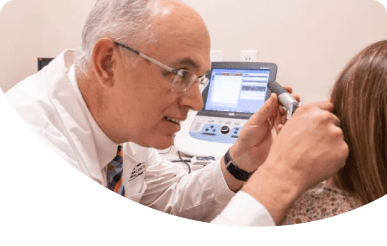
- Otoscopy: A visual inspection of the ear canal and eardrum to check for wax, infection, or structural concerns.
- Pure-tone audiometry: You will listen through headphones and respond to tones at different frequencies and volumes. This produces your audiogram.
- Speech audiometry: Tests how well you understand speech at different volumes, helping to identify the practical impact of any hearing loss.
- Tympanometry: A quick, painless test of middle ear function that detects fluid, perforations, or Eustachian tube problems.
- Acoustic reflex testing: Measures the reflexive muscle response in the ear, providing information about the hearing pathway.
How Often Should You Get a Hearing Test?
Adults over 50 should have their hearing screened every one to two years. If you work in a noisy environment, have a family history of hearing loss, or have noticed any changes in your hearing, annual testing is advisable. Children should be screened at birth and again at key developmental milestones.
How to Prepare for Your Hearing Test
- Avoid extremely loud noise (concerts, power tools) for 16 to 24 hours before testing.
- Note any medications you are taking, especially those known to affect hearing.
- Bring a list of questions or concerns for your audiologist.
- If possible, bring a trusted family member or friend — a second perspective is helpful.
Frequently Asked Questions
Does a hearing test hurt?
Not at all. Hearing tests are completely non-invasive. You will wear headphones, respond to sounds, and listen to words — nothing more.
How long does a hearing test take?
A comprehensive audiological evaluation typically takes 45 minutes to one hour, including time to review your results and discuss recommendations.
Do I need a referral to see an audiologist?
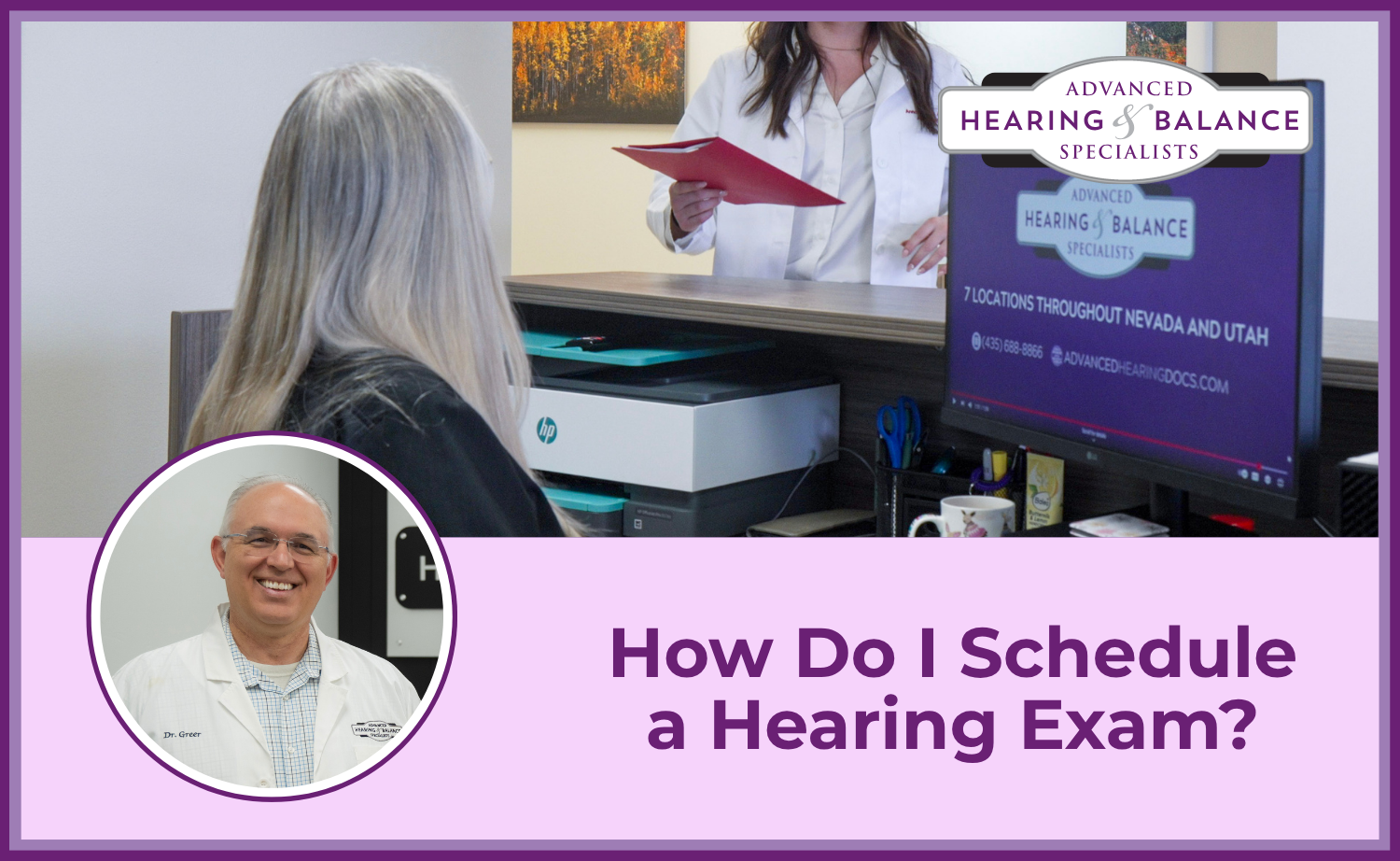
In most cases, you do not need a referral to schedule a hearing evaluation at Advanced Hearing & Balance Specialists. You can contact us directly to book an appointment.
Advanced Hearing & Balance Specialists offers convenient scheduling for
comprehensive hearing evaluations. Whether you are experiencing hearing
difficulties or simply due for a routine check, our audiologists are here for
you. Contact us to book your appointment today.