Do I Need Hearing Aids?

💬 Summarize with AI
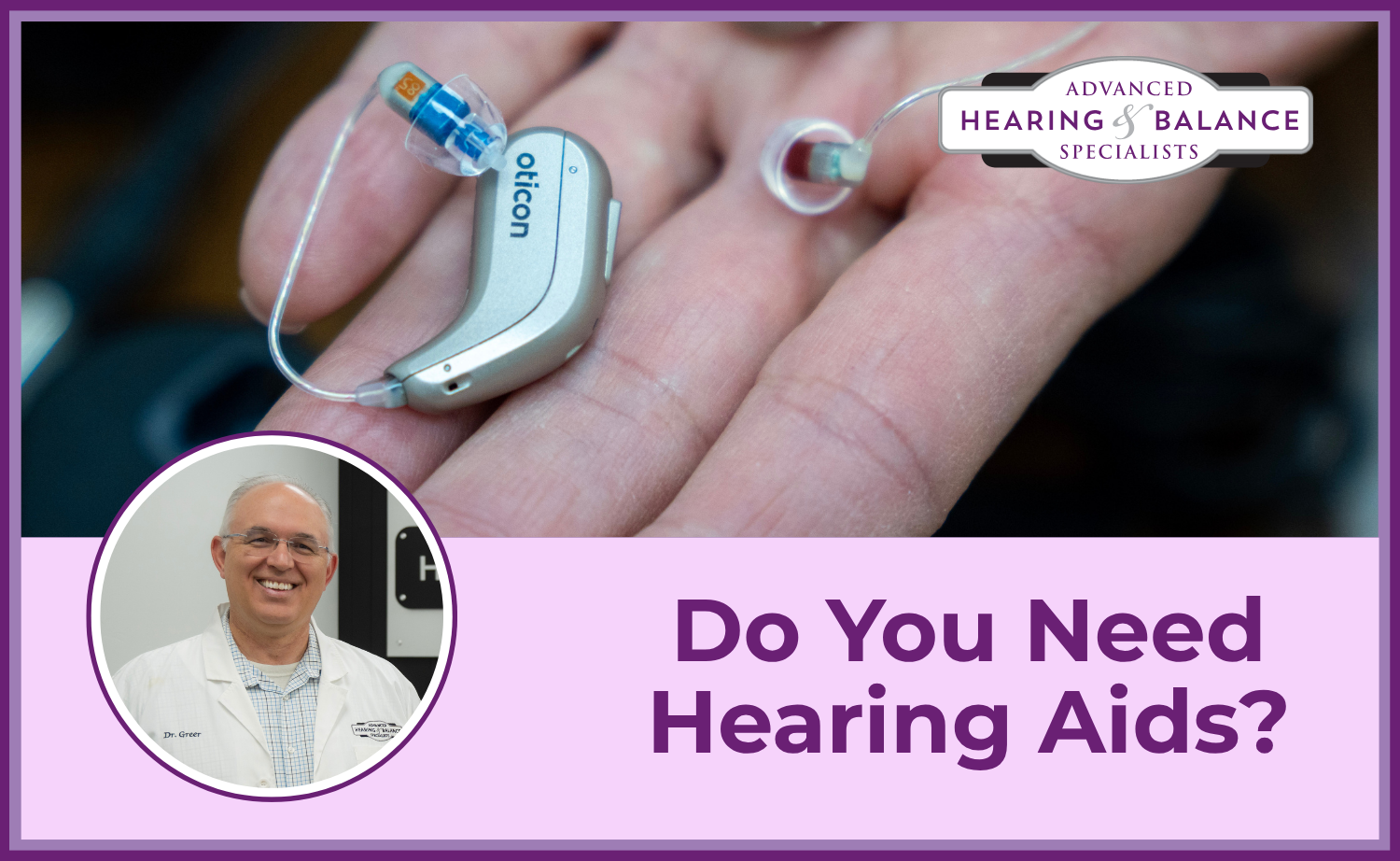
Have you ever found yourself leaning closer during a conversation, asking a friend to repeat themselves, or missing the punchline of a joke because you simply did not catch it? These moments can feel like minor inconveniences, but they are often early signs of hearing loss. At Advanced Hearing & Balance Specialists, we help people understand when it is time to consider hearing aids and what to expect when that time comes. Hearing loss is one of the most common chronic conditions in the United States, affecting tens of millions of adults of all ages. It tends to develop gradually, making it easy to dismiss or attribute to distraction or aging. The good news is that modern hearing aids are more discreet, powerful, and comfortable than ever before.

Signs You May Need Hearing Aids

Hearing loss rarely announces itself all at once. Instead, it creeps in quietly over months or years. Watch for these warning signs:
  • You frequently ask people to repeat themselves or say “what?” during conversations.
  • You struggle to follow speech in noisy environments like restaurants or social gatherings.
  • You turn the TV or radio up higher than others find comfortable.
  • You have difficulty understanding speech on the phone or through speakers.
  • You experience ringing, buzzing, or humming in your ears (tinnitus).
  • People seem to be mumbling even when they are speaking clearly.
  • You find it easier to understand someone when you can see their face.
  • Conversations leave you mentally fatigued from the effort required to follow along.
If several of these apply to you, a hearing evaluation is a smart next step. Many people wait more than a decade before seeking help. Earlier intervention leads to better outcomes.

What Causes Hearing Loss?

Understanding the root cause of your hearing difficulties helps audiologists recommend the right treatment. The most common causes include age-related changes, noise exposure, ear infections, earwax buildup, and certain medical conditions such as diabetes or cardiovascular disease. Some hearing loss is temporary and fully treatable; other types involve permanent changes to the auditory system that hearing aids can manage effectively.

How an Audiologist Evaluates Your Hearing

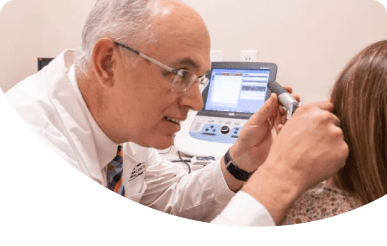
At Advanced Hearing & Balance Specialists, a hearing evaluation begins with a review of your medical history and symptoms. Your audiologist then performs a series of painless, non-invasive tests measuring how well you hear tones at different frequencies, how clearly you understand speech, and how well your middle ear is functioning. Results are plotted on an audiogram — a visual map of your hearing ability across the range of sounds most critical for everyday communication.If the results indicate hearing loss significant enough to affect your quality of life, your audiologist will discuss your options.

Recommendations may include hearing aids, assistive listening devices, earwax removal, a medical referral, or a combination of approaches.

When Should You See an Audiologist?

Do not wait for the perfect moment. If you are over 50, have regular exposure to loud noise, or have noticed any of the signs above, scheduling a hearing evaluation is one of the best things you can do for your long-term health. Sudden hearing loss in one or both ears, however, should be treated as a medical emergency — seek same-day evaluation.

Frequently Asked Questions

How do I know if I need hearing aids?
If you regularly mishear words, struggle in noisy settings, or have been told by others that your hearing is poor, a professional evaluation is the right first step. Hearing aids are recommended when the degree of hearing loss is affecting your daily life.
Over-the-counter hearing aids are now available for mild to moderate hearing loss in adults 18 and older. However, an audiologist evaluation ensures you receive the right style, fit, and programming for your specific hearing profile — something OTC devices cannot provide.
Your audiologist at Advanced Hearing & Balance Specialists will guide you through pure-tone audiometry and speech recognition testing. The process is completely painless and takes about an hour. Afterward, you will receive a detailed explanation of your results and recommended next steps.
Coverage varies by plan. Many private insurers offer partial coverage, and some Medicare Advantage plans include hearing aid benefits. Our team can help you navigate your options and identify the most cost-effective path forward.

If you have concerns about your hearing or balance, the team at Advanced Hearing & Balance Specialists is here to help. We provide comprehensive diagnostic evaluations and personalized treatment plans tailored to your needs. Contact us today to schedule an appointment.

total hearing
& balance care
We take care of people with hearing difficulties and balance issues by providing extensive diagnostic tests to determine the best solutions for their individual needs.
Table of Contents
total hearing
& balance care
We take care of people with hearing difficulties and balance issues by providing extensive diagnostic tests to determine the best solutions for their individual needs.

or

Give us a call on